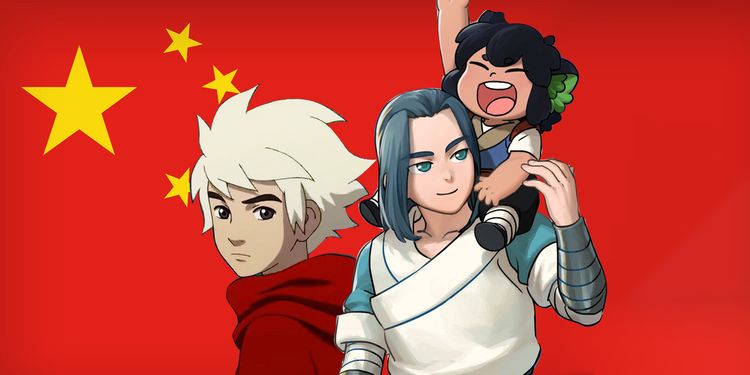
You’ve heard of Disney and Pixar, and of course you’ve heard about anime – but what about donghua? Despite the slow rise to fame of the original Chinese animation, also known as Donghua, China’s animation industry is the third largest in the world — and only getting bigger.
The two films to be discussed in this article – Big Fish & Begonia and The Legend of Hei were chosen for three reasons. The first was that they were brought up on multiple film lists multiple times (after all, repeated mentions have to count for something, right)? Secondly, they were all 2D films (as that is our topic today). And finally, they were the most accessible. Although there were lots of other interesting films, for example a joint effort with Japanese animation studio Madhouse focused on a golden Tibetan Mastiff, that I just couldn’t cover because you can’t rent it.
Despite some movies being harder to stream, don’t let the “sudden” popularity of Chinese animation fool you – Donghua has its own deep roots.The influential artists that started it all were the Wan Brothers. The Brothers took inspiration from their love of painting, puppetry, and old American cartoons (such as Popeye the Sailor Man and Betty Boop).Their first work was an animated short called Uproar in the Studio (but you can’t rent that) in 1926 – 2 years before Walt Disney‘s Steamboat Willie in 1929. In return, Disney’s Snow White and the Seven Dwarves (1937) inspired the Wan brothers to create one of their most successful works, Princess Iron Fan (1941). (Fun fact: The film was a huge inspiration for teenage Osamu Tezuka, the creator of Astro Boy.)
The animation boom couldn’t last, though. The invasion of China and the outbreak of World War II slowed down the production of Chinese animation a great deal but never killed it. After the war, the Wan Brothers made their renowned passion project – Havoc in Heaven (1964). Havoc in Heaven opened the door to the future of Chinese animation by proving that although Animated films took more time and effort to produce, they could make a lot of money.
Big Fish & Begonia (2016)
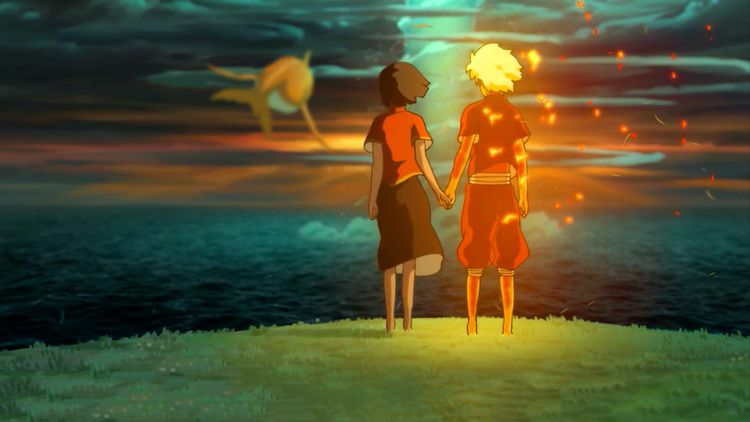
Despite the 57 years since Havoc in Heaven, folklore-inspired fantasy is still a staple of 2D animation. Big Fish & Begonia, one of the most popular modern 2D films from China, takes its inspiration from Chinese Taoist myths. The story follows Chun, a young girl from a spirit world that controls things like the tide and changing seasons in our world. When Chun comes of age, she is allowed to visit the human world for a couple of days, but when a boy accidentally dies while saving from a net, Chun uses magic to resurrect him – oblivious to the dire consequences she’d set in motion.
Big Fish & Begonia started its life as a 2004 flash animation that was brought into the public eye by a Kickstarter. Viewers were impressed with its similarity to the fanatical vibe of animation dynamo Studio Ghibli. Chinese culture oozes through the setting’s detailed background art and mythology-inspired story.There are some really great moments of detailed animation thought the film, especially of nature – scenes of vines twisting upward and branches creaking to life are outstanding, but nobody would expect less from Studio Mir (the studio responsible for The Legend of Korra). While the classical tale of hubris and kids making immature choices may frustrate some viewers, Big Fish & Begonia is worth watching for the animation spectacle alone.

